
Gua Sha for Facial Tension: How to Use It for Jaw Tension and Puffiness
Share
If you hold tension in your jaw, temples, cheeks, or forehead, a few minutes of gentle facial massage can feel comforting. A gua sha stone gives your hands a smooth surface to work with, making it easier to move slowly across different areas of the face.
What gua sha cannot reliably do is permanently sculpt your face, “remove toxins”, or treat conditions such as temporomandibular disorders. Scientific research specifically on facial gua sha for facial tension is still limited.
The most useful way to think about gua sha is as a gentle massage tool: something that may provide temporary relaxation, comfort, and cosmetic changes in puffiness when used carefully.
What does facial tension feel like?
Facial tension is not one specific condition. People often use the term to describe sensations such as:
• Tightness around the jaw
• A habit of clenching the teeth
• Tired-feeling cheeks
• Tension around the temples
• A furrowed or “held” forehead
• A face that feels tense after concentrating or feeling stressed
Stress and jaw clenching can contribute to tension around the jaw. However, persistent jaw pain or restricted movement is different from ordinary end-of-day tension.
Pain around the jaw joint, difficulty opening the mouth, locking, painful clicking, or pain spreading into the face or neck can be associated with temporomandibular disorders, or TMD, and deserve appropriate assessment rather than being treated as a skincare concern.
What is facial gua sha?
Gua sha has roots in traditional East Asian medicine. Traditional body gua sha usually involves considerably stronger scraping and may intentionally produce temporary redness or petechiae.
Facial gua sha is much gentler. In modern skincare routines, a smooth-edged tool is lightly glided over lubricated skin as a form of facial massage.
This distinction matters. Research involving traditional body gua sha cannot automatically be applied to a gentle jade stone used on the face.
Can gua sha actually help facial tension?
Possibly, but the evidence needs context.
Massage itself can feel relaxing, and some people find that gently working around the jaw, cheeks, and temples helps areas that feel temporarily tight. There is also some early research specifically involving facial gua sha.
A small 2025 randomized study compared facial gua sha with facial rolling in 34 women over eight weeks. Participants used their assigned technique for 10 minutes, five times per week. The gua sha group showed measurable reductions in certain muscle-tone parameters. However, the study was small and did not include a no-massage control group, so it cannot establish that gua sha itself is an effective treatment for facial or jaw tension.
A realistic interpretation is:
Gua sha may be useful as a gentle facial massage practice for temporary relaxation and comfort. There is not enough evidence to describe it as a medical treatment for jaw tension, TMJ disorders, headaches, or chronic facial pain.
What about circulation?
This is another area where claims often become stronger than the research.
A small pilot study involving 11 healthy people found increased surface microcirculation for a short period following traditional gua sha. However, the treatment was performed on the back, not the face, and it involved the stronger traditional technique rather than gentle facial massage.
It therefore suggests that gua sha can influence local blood flow under certain conditions, but it does not prove that a gentle facial routine creates meaningful or lasting changes to facial skin.
For skincare purposes, you do not need to chase redness. Facial gua sha should not require aggressive pressure to feel effective.
Can gua sha reduce facial puffiness?
You may notice a temporary cosmetic difference after facial massage, particularly in the morning.
Puffiness can involve temporary fluid accumulation, and gentle massage may change how the face looks or feels for a short time. However, strong claims that a gua sha stone specifically “drains the lymphatic system” or detoxifies the face go beyond the available evidence.
A safer expectation is:
A short facial massage may temporarily make a puffy face feel lighter or look less puffy.
That is different from permanently changing facial structure or treating unexplained swelling.
If facial swelling is sudden, painful, persistent, one-sided, or associated with other symptoms, it should not be managed simply with facial massage.
Gua sha for jaw tension: what it can and cannot do
The jaw is one of the most common areas where people seek relief from tension.
For ordinary muscle tightness after a stressful day, gently massaging the jaw area may feel pleasant. You might also become more aware of how tightly you were holding your jaw in the first place.
But there is an important boundary:
Gua sha is not an established treatment for temporomandibular disorders.
TMD can involve jaw-joint or chewing-muscle pain, stiffness, restricted movement, locking, or painful joint noises. Conservative treatments may help some people, but facial gua sha should not be presented as a treatment for these symptoms.
If you simply notice occasional tension, a gentle massage ritual may be reasonable. If you experience recurring pain, jaw locking, difficulty chewing, restricted opening, or frequent headaches alongside jaw symptoms, speak with a dentist, doctor, or other appropriately qualified healthcare professional.
How to use gua sha for facial tension
You do not need a complicated map of the face.
For everyday use, focus on slow movement, light pressure, enough slip, and areas that feel comfortable.
Step 1: Start with clean skin
Cleanse your face and wash your hands. Your gua sha stone should also be clean before it touches the skin.
Step 2: Add enough slip
Never repeatedly drag a dry stone across dry skin.
Apply a moisturiser, facial oil, or another skincare product that gives the tool enough slip to move smoothly without pulling.
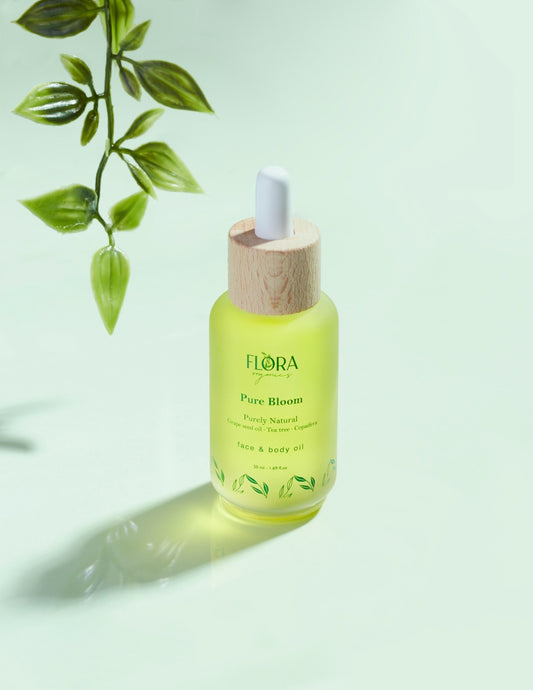
If Pure Bloom Oil is already part of your routine, a small amount can provide slip for facial massage. It is not medically necessary. Its role here is simply to reduce friction and make the massage more comfortable.
Step 3: Keep the tool relatively flat
Rather than pressing the edge vertically into your face, keep most of the stone's surface close to the skin.
The motion should feel like a glide, not a scrape.
Step 4: Move slowly
Fast strokes are not necessary. Slow movements make it easier to notice your pressure and whether an area actually feels comfortable.
Jaw and lower-face technique
If the jaw feels tight, start gently.
• Begin near the centre of the chin
• Glide slowly along the jaw toward the ear
• Repeat a few times rather than making dozens of strokes
• Keep pressure comfortable
• Avoid pressing aggressively into the jaw joint in front of the ear
If you reach a tight area, resist the instinct to push harder.
More pressure does not automatically mean more benefit.
If you regularly clench your jaw, becoming aware of the habit itself can also matter. Reducing habits such as jaw clenching is part of conservative self-management advice for TMD symptoms.
Cheeks and temples
For the cheeks:
• Place the stone beside the nose
• Glide outward across the cheek toward the side of the face
• Keep pressure gentle and even
Around the temples, use especially light pressure.
Some people find slow massage here relaxing. That is a reasonable comfort-based benefit to describe, but it should not be framed as treatment for headaches or migraines.
Forehead
For forehead tension:
• Start around the centre of the forehead
• Glide outward toward the temples or upward toward the hairline
• Keep your forehead relaxed rather than actively raising your eyebrows
You do not need to repeatedly scrape the same line in an attempt to remove wrinkles. Any immediate smoothing or visual change after massage should be treated as temporary, not structural.
What about the neck?
Many facial gua sha tutorials begin with the neck and use directional strokes associated with lymphatic drainage.
There is nothing wrong with including gentle neck massage if it feels comfortable, but there is not enough evidence to say that a specific sequence is necessary to “open” lymphatic pathways before touching the face.
Keep neck pressure particularly gentle and avoid aggressive pressure over vulnerable areas.
A simple skincare routine does not need an elaborate lymphatic sequence to be useful.
How much pressure should you use?
Less than many social videos suggest.
For facial gua sha, the stone should glide without:
• Pain
• Strong pulling
• Persistent redness
• Bruising
• Petechiae
• Tenderness afterwards
A little temporary flushing may occur with massage, but visible bruising is not a goal of facial gua sha.
If an area becomes sore, reduce pressure or stop.
How long should facial gua sha take?
There is no scientifically established ideal duration for an everyday cosmetic routine.
For most people, 3 to 5 minutes is enough to create a calm, deliberate massage without turning skincare into another task.
The small 2025 facial study used 10-minute sessions five times per week, but that research protocol should not be interpreted as the minimum required for benefit.
If two minutes feels good, two minutes is fine.
How often can you use gua sha?
There is no evidence-based requirement to use it every day.
For everyday skincare, a reasonable starting point is:
• 2 to 4 times per week if you enjoy a longer massage
• A shorter routine more frequently if your skin remains comfortable
• Less often if your skin is reactive or easily irritated
The most important signal is your skin.
Redness that persists, tenderness, irritation, or worsening breakouts are reasons to reduce pressure, reduce frequency, or stop altogether.
Do you need facial oil for gua sha?
You need slip, but that does not necessarily mean you need oil.
A facial oil works well because it reduces friction and tends to stay slippery long enough for massage.
You can also use another skincare product if it provides enough glide and is suitable for your skin.
The useful test is simple:
If the skin moves or pulls significantly underneath the stone, you need more slip or less pressure.
Can gua sha permanently sculpt your face?
There is currently insufficient evidence to support claims that routine facial gua sha permanently reshapes the face or jawline.
Temporary changes can look convincing. Massage, pressure, superficial fluid movement, lighting, facial expression, and temporary skin flushing can all affect how defined the face appears immediately afterwards.
The recent small facial study did find changes in measured facial contour over eight weeks, but its size and design are not strong enough to establish permanent facial reshaping.
A more realistic expectation is temporary freshness or relaxation, rather than structural transformation.
Does gua sha “detox” the face?
There is no good evidence that sliding a stone across your face detoxifies the body.
Your lymphatic system is an important part of normal fluid balance and immune function, but that is not the same as proving that a gua sha routine removes unspecified “toxins”.
You do not need detox language to explain why facial massage can feel good.
When should you avoid facial gua sha?
Pause the routine when the skin is:
• Sunburned
• Broken or bleeding
• Actively irritated
• Painful to touch
• Experiencing a significant inflammatory flare
• Recovering from a procedure where your clinician has advised against massage
Be particularly careful if you bruise easily, have a bleeding disorder, or use medication that affects clotting. More intensive gua sha can produce bruising or petechiae, so discussing it with a healthcare professional may be appropriate in these circumstances.
If you recently had injectables, surgery, laser treatment, or another facial procedure, follow the aftercare instructions from the professional who treated you rather than a general gua sha routine.
Common gua sha mistakes
Most problems come from trying to make the routine work “harder”.
• Using too much pressure: Facial gua sha should not hurt.
• Working on dry skin: Friction creates unnecessary pulling.
• Trying to force facial sculpting: More scraping does not create permanent contour changes.
• Massaging irritated skin: Give the skin time to settle first.
• Ignoring recurring jaw pain: A skincare tool should not replace appropriate evaluation.
• Using an unclean tool: Wash and dry it regularly.
• Copying body gua sha pressure on the face: They are not the same technique.
When facial or jaw tension deserves professional attention
Occasional tightness after a stressful day is very different from recurring facial or jaw pain.
Speak with a dentist, doctor, or appropriate healthcare professional if you experience:
• Jaw pain that persists or keeps returning
• Difficulty opening your mouth normally
• Jaw locking
• Painful clicking or grinding
• Pain when chewing
• Facial or neck pain that spreads
• Frequent or severe headaches associated with jaw symptoms
• Unexplained or persistent facial swelling
TMD symptoms can have different causes, and there is no single treatment that applies to everyone. Persistent symptoms deserve proper evaluation rather than repeated self-massage.
A simple everyday gua sha routine
If you want to keep facial gua sha uncomplicated:
• Clean your face and tool
• Apply enough skincare for comfortable slip
• Keep the stone relatively flat
• Glide gently along the jaw, cheeks, temples, and forehead
• Spend around 3 to 5 minutes if that feels good
• Stop if anything hurts
• Clean and dry the stone afterwards
That is enough.
You do not need aggressive pressure, complicated lymphatic maps, or a ten-step facial sculpting routine.
Conclusion
Gua sha can be a pleasant way to bring gentle facial massage into your skincare routine, particularly when your jaw, cheeks, temples, or forehead simply feel tense after a long day.
There is some early research suggesting facial gua sha may influence measures such as muscle tone, and traditional gua sha has shown short-term effects on local microcirculation in small studies. But the evidence is still too limited to describe it as a treatment for jaw disorders, chronic pain, headaches, or persistent swelling.
For everyday use, think comfort rather than correction: light pressure, enough slip, slow movements, and a few quiet minutes. If pain or jaw symptoms persist, let skincare stay skincare and speak with a qualified healthcare professional.