
How to Recycle Skincare Packaging in Norway: A Simple Sorting Guide
Share
Recycling skincare packaging in Norway gets easier when you stop thinking “product” and start thinking material. Most skincare empties fit into a few everyday categories, but the tricky parts (pumps, droppers, mixed materials) are where people get stuck.
This guide keeps it simple: what goes where, how clean it needs to be, and the small habits that make sorting feel effortless.
Important: This is educational content, not official municipal waste guidance. Sorting systems can vary slightly by kommune, so if you’re unsure, check your local guidance or search the item on Sortere.
The one rule that saves time
Sort the packaging, not the brand.
Look at what the packaging is made of and sort by material. If something feels unclear, search it on Sortere.
Step 1: Empty, quick clean, dry
You don’t need perfection. You need “clean enough to recycle”.
A practical routine:
- Empty the product as much as possible.
- If it’s oily or sticky, do a quick cold rinse.
- Let it drip dry while you finish your routine.
Step 2: Sort by the main material
Plastic packaging (plastemballasje)
Most skincare bottles, tubes, caps, and many jar formats are plastic packaging, as long as they’re empty and reasonably clean.
Examples:
- Body wash and shampoo bottles
- Face wash bottles
- Plastic tubes (body lotion, hand cream)
- Plastic jars (scrubs), if the jar is plastic
Local note: Collection methods vary. Some places use bags, others use bins. In Oslo, plastic packaging is typically sorted in purple bags.
Glass and metal packaging (glass- og metallemballasje)
In many municipalities, glass and metal packaging are sorted together.
Examples:
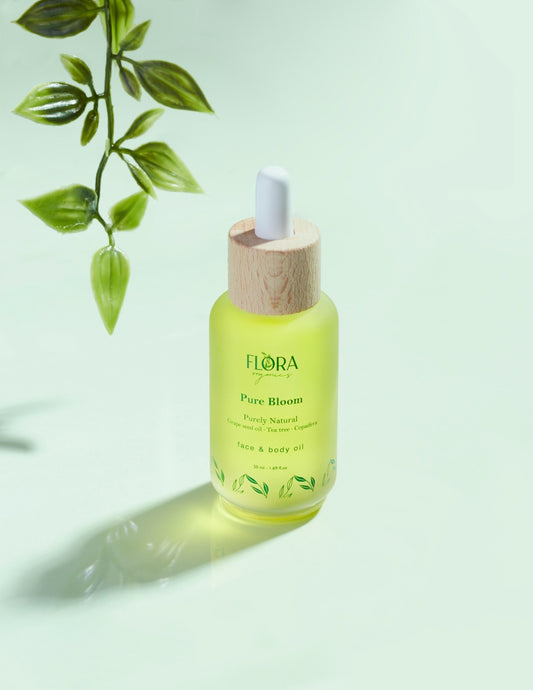
- Glass serum bottles (remove the dropper parts, see below)
- Metal tins (balms)
- Metal caps and lids that are clearly packaging
Tip: You usually don’t need to remove labels. For glass containers, it can also be helpful not to screw the lid back on tightly before recycling.
A small Flora note: reuse first, then recycle
If you’re using Flora, our packaging is designed to be reusable and recyclable. Before you recycle, consider reusing jars and bottles in small, practical ways at home.
Simple reuse ideas:
- Store cotton pads, hair ties, clips, or small travel items.
- Use a jar as a tidy organiser in the bathroom.
- Keep one as a small container for jewellery or pins.
When you’re done reusing it, empty it, quick rinse if needed, let it dry, then sort by material using the guide above.
Paper and cardboard (papir/papp)
Most outer boxes and paper inserts go here, as long as they’re clean and dry.
Examples:
- Cardboard product boxes
- Paper leaflets and inserts
Residual waste (restavfall)
Use this for items that:
- Are heavily contaminated with product you can’t rinse out
- Are mixed-material pieces you can’t separate
- Are not packaging (tools, accessories)
The “tricky parts” people ask about
Pumps, sprayers, droppers
These are often mixed materials (plastic + metal spring). The simplest rule:
- If you can easily separate parts, sort each by material.
- If you can’t separate it cleanly, check Sortere for that specific item or use residual waste.
Sample sachets and mini packets
Many sachets are layered materials and are often not recyclable in normal household packaging streams. If you’re unsure, check Sortere or your local kommune guidance.
Tools, mirrors, and devices
These are not packaging.
- Small devices belong in e-waste systems, not household recycling.
- Beauty tools are often residual waste, unless your kommune has a specific solution.
Where “hazardous” can appear in beauty routines
Some beauty-related items may belong in hazardous waste collection (for example certain chemical products or pressurised containers). If you’re unsure, treat it as a “check before you throw” moment and look it up locally.
A simple sorting checklist for skincare empties
After you finish a product:
- Empty it fully.
- Quick rinse if needed, let it dry.
- Sort the main body:
- Plastic bottle/tube/jar → plastemballasje
- Glass bottle → glass- og metallemballasje
- Cardboard box → papir/papp
- For pumps/droppers: separate if easy, otherwise check Sortere.
Conclusion
Recycling skincare packaging in Norway becomes simple when you follow two habits: sort by material and keep packaging empty and clean enough. For the parts that feel confusing (pumps, droppers, mixed materials), don’t guess: check Sortere or your local kommune guidance.